Vendors affect cost, reliability, compliance, and delivery across your operation. Keeping track of contacts, contracts, requirements, and performance becomes harder as the vendor list grows, especially when that information lives across documents, spreadsheets, and email threads.
In AnyDB, vendor management operates as a connected system, with every part of the relationship remaining linked.
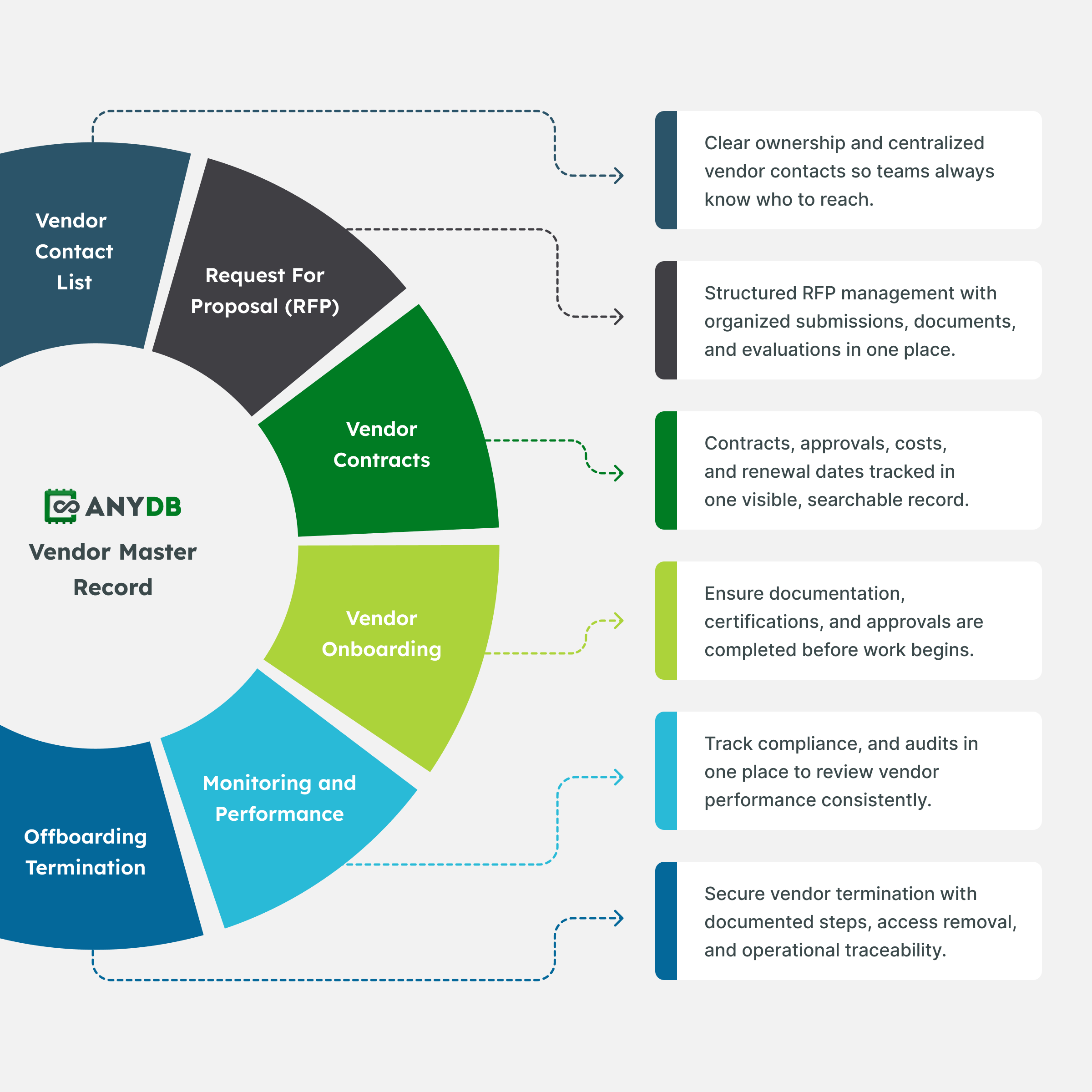
Here is how the vendor data model is structured:
• Vendor Contact List
A centralized place to manage vendor contacts, roles, ownership, and communication status. Teams always know who the right contact is and where the relationship stands.
• Request for Proposal (RFP)
Create RFPs with scope, requirements, deadlines, and priorities. Vendor responses, documents, and quotations remain attached to the request to keep evaluations organized.
• Vendor Contracts
Contracts, payment terms, licenses, and approvals are stored in the same system. Contract status, renewal dates, and costs remain visible without searching through files.
• Vendor Onboarding
Onboarding checklists ensure the vendor is ready before work begins. Certifications, documentation, and approvals can be tracked step by step.
• Monitoring and Performance
KPIs, compliance documents, audits, and vendor reports remain connected to the vendor record, making performance reviews and compliance checks easier to run.
• Offboarding Termination
When a relationship ends, the termination process is documented through a structured checklist, including contract closure, access removal, and operational handover.
Managing vendors this way keeps the full lifecycle organized in one place.
Teams gain:
• Clear ownership of vendor relationships
• Contracts and documents easy to locate
• Structured onboarding and compliance tracking
• Continuous performance monitoring
• A documented and secure offboarding process
How is vendor information currently organized in your operation?